
TenderKosh for EPC teams
Turn tender reading into faster bidding decisions.
Discover relevant tenders, monitor corrigenda, compare opportunities, and move from document reading to structured action.
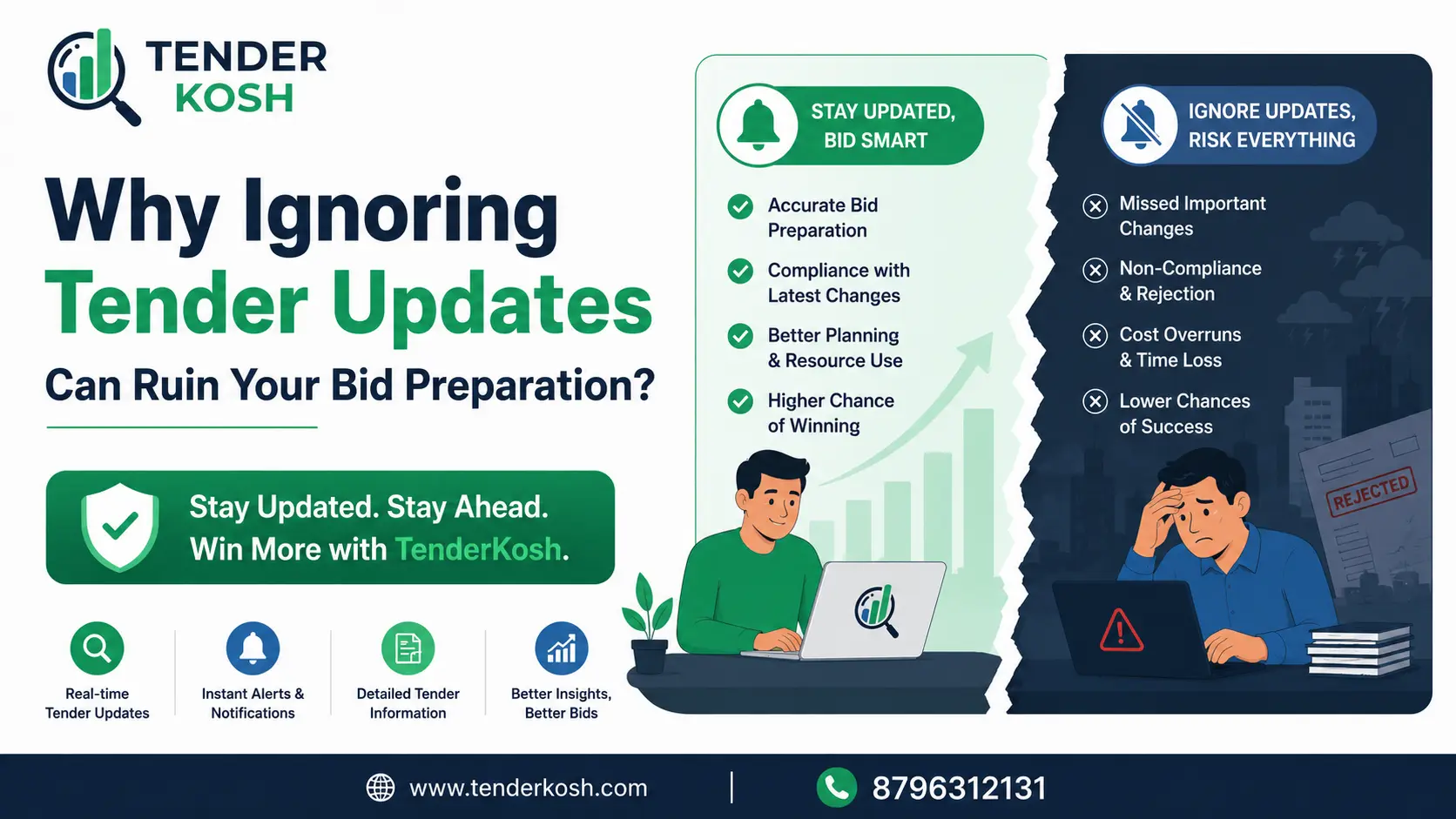
Tender Updates play a critical role in government bidding and procurement processes. Missing a corrigendum or addendum can lead to bid rejection, pricing errors, compliance issues, and lost business opportunities.
A corrigendum usually corrects or modifies existing tender information, while an addendum adds new information or clarifications to the tender document.
Yes. Corrigenda become part of the original tender document and are legally applicable to all bidders.
Yes. Missing an amendment can result in technical non-compliance, incorrect documentation, or pricing errors that may lead to disqualification.
Large government tenders commonly receive multiple corrigenda and clarifications before submission deadlines.
Businesses can use structured internal processes, assign dedicated tracking responsibility, and adopt AI-powered tender intelligence platforms that monitor amendments automatically.
Although both terms refer to tender updates, they serve different purposes in procurement processes.
A corrigendum is generally issued to correct existing information in the original tender document. This may include corrections to submission deadlines, eligibility conditions, technical specifications, or financial requirements.
An addendum, on the other hand, is usually issued when the authority wants to provide additional information, clarifications, or supporting documents after the tender has already been published.
Both corrigenda and addenda become part of the final tender document and are legally binding for all bidders.
Government tenders often undergo multiple revisions before the final submission deadline. These updates can significantly affect bid preparation and project costing.
For example, a corrigendum may increase the minimum turnover requirement or revise technical eligibility conditions. If a bidder fails to notice these changes, the bid may become non-responsive even before financial evaluation.
Similarly, addenda issued after pre-bid meetings may introduce new compliance requirements, revised drawings, or updated timelines.
Many businesses spend significant time preparing bids but still face rejection because they overlook small amendments hidden inside revised tender documents.
Businesses participating in government tenders should establish a structured process for monitoring amendments and corrigenda.
Modern AI-powered tender intelligence platforms can help companies monitor tender updates automatically and reduce the risk of missing critical changes.
Traditional tender monitoring methods often require teams to manually check multiple procurement portals every day. This process can be time-consuming and increases the risk of missing critical corrigenda or addenda.
AI-powered tender intelligence platforms are helping businesses automate tender discovery, amendment tracking, document analysis, and deadline monitoring. These systems can quickly identify important changes in tender documents and notify bid teams instantly.
For MSMEs, contractors, consultants, and suppliers, automated tender tracking can improve efficiency, reduce bid preparation errors, and increase overall participation success rates in government procurement.
In government procurement, the original tender document is only the starting point.
The real challenge is staying updated until the final submission date.
Corrigenda and addenda may appear to be small administrative notices, but they can completely change:
Successful bidders are not only the ones with competitive pricing.
They are the ones who track updates consistently, respond quickly to changes, and adapt their bids accordingly.
If you want to improve your tender success rate, make amendment tracking a core part of your bidding process — not an afterthought.
TenderKosh helps businesses track tenders, corrigenda, deadlines, and amendments across GeM, CPPP, NHAI, NTPC, SECI, and state portals — all from one intelligent dashboard.
Discover relevant tenders, monitor corrigenda, compare opportunities, and move from document reading to structured action.