
TenderKosh for EPC teams
Turn tender reading into faster bidding decisions.
Discover relevant tenders, monitor corrigenda, compare opportunities, and move from document reading to structured action.
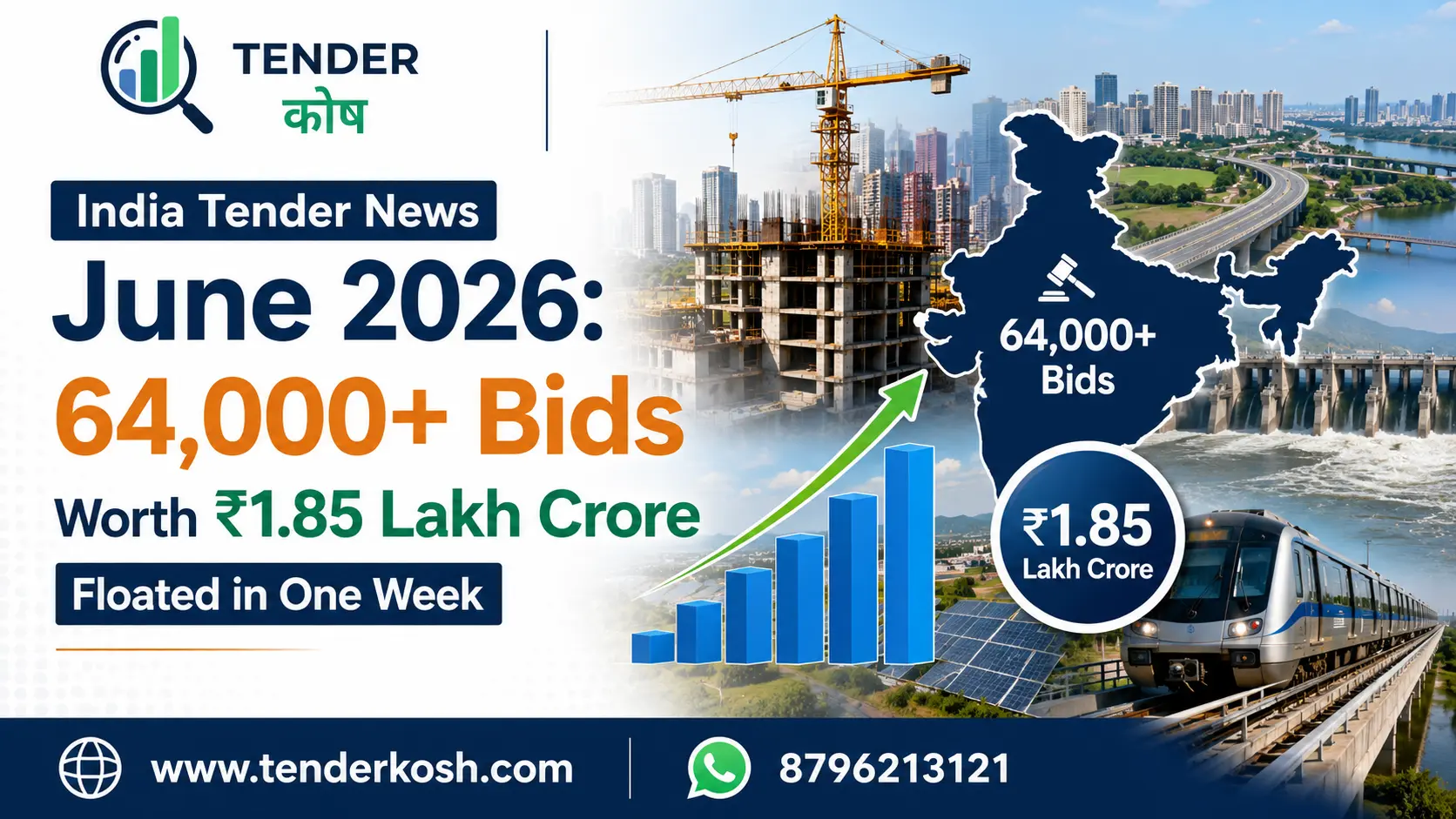
Indian government buyers have unleashed a massive wave of procurement opportunities. According to procurement-tracking reports, between June 7 and June 14, 2026 alone, more than 64,000 new tenders were floated with a combined value of roughly ₹1.85 lakh crore — making it one of the most aggressive tendering weeks India has seen in 2026. For contractors, MSMEs, and suppliers, this is the tender news that matters most this month: a clear signal of strong momentum across infrastructure, energy, IT, and civic-development projects, and the tender news every bidder is watching.
This roundup breaks down what is driving the surge, the biggest mega-projects now in play, the fresh high-value opportunities open for bidding, the cancellations and fraud cases bidders should be aware of, and — most importantly — what it all means for your business and how to act on it safely.
A note on figures and sourcing: The headline totals, project values, timelines, and individual tender details in this tender news roundup are based on procurement-tracking reports and public sources, and several are estimates or ranges. Tender values, dates, and statuses change frequently and through corrigenda. Always verify any specific tender directly on the relevant official portal before preparing or submitting a bid. Items relating to investigations or alleged fraud are reported as allegations, not proven findings.
Key Takeaways
The spike is not random — it reflects several large government priorities converging at once. Understanding the drivers behind this tender news helps you decide where to focus your bidding effort.
NHAI highway packages, metro rail projects, and expressways are driving large-ticket civil and systems tenders across multiple states.
Solar PV and EPC projects are being floated by state PSUs as India pushes toward its renewable-capacity goals, creating a steady pipeline.
Central agencies are tendering AI, data platforms, and software systems — a fast-growing category that opens doors for technology firms.
Water and sewerage, urban development, and event-ready projects are generating sustained demand for contractors and utility suppliers.
University campuses, hostels, and institutional buildings are adding a steady flow of mid-sized civil works to the mix.
The early-calendar-year stretch often sees departments accelerate procurement to use allocated budgets, lifting overall tender volumes.
These are among the largest projects reported to be in play during 2026. Values and timelines are estimates and ranges — treat them as indicative and confirm against the issuing authority.
| Project | Authority | Sector | Estimated Value |
|---|---|---|---|
| Surat Metro Rail (Civil & Systems) | Gujarat Metro Rail Corp | Urban Transit | ₹8,000–12,000 Cr |
| Expressway & Economic Corridor | NHAI / MSRDC | Roads & Highways | ₹5,000+ Cr |
| Ahmedabad–Dholera Expressway | NHAI | Expressway | ₹3,000+ Cr |
| Solar & Renewable EPC Projects | State PSUs | Renewable Energy | ₹500–4,000 Cr |
| CPWD Central Civil Works | CPWD | Buildings | ₹100–1,000 Cr+ |
| State Water & Sewerage Projects | State Urban Dev. Depts. | Water & Utilities | ₹100–600 Cr |
| Clean Air Management (UP-CAMP) | Govt of UP | Environment | ₹500+ Cr |
| BARC Civil & Mechanical Works | Bhabha Atomic Research Centre | Civil / Mechanical | ₹10–50 Cr |
Beyond the mega-projects, a steady stream of mid-sized, high-value tenders opened during the month — spanning technology, renewable energy, and education infrastructure.
| Tender | Authority | Sector | Reported Closing |
|---|---|---|---|
| AI & Data Platform (Agentic AI) | CAG | IT / AI | Early June 2026 |
| 250 MW Solar PV Project (Rajasthan) | EPI | Renewable Energy | Late June 2026 |
| IIM Sirmaur Phase-II Campus Design | IIM Sirmaur / EPI | Education Infra | Late June 2026 |
| Border Flood Lighting (Mizoram) | EPI | Border Infrastructure | Late June 2026 |
| Library + Hostels (Palamuru University) | Palamuru University, Telangana | Education | Late June 2026 |
Tip: Closing dates on live tenders move frequently through corrigenda. Before you commit resources to any of the above, confirm the current closing date and specifications on the issuing authority’s portal. Our guide on tracking tender corrigenda explains how to never get caught out by a last-minute change.
Cancellations are a normal part of procurement, but they matter to bidders who may have invested preparation effort. Reported cancellations in early-to-mid June 2026 included routine maintenance and service tenders across various government offices and local bodies. The common lesson is the same as always: cancellations often follow non-compliant bids or changed requirements, which is why staying on top of corrigenda and re-tenders is essential.
Why cancellations matter to you: When a tender is cancelled and re-floated, the competitive field resets — sometimes to your advantage. Tracking cancellations and re-tenders means you can re-enter a process you previously missed, or strengthen a bid that was earlier disqualified on compliance. For why compliance is so often the deciding factor, see our breakdown of tender rejection over EMD and documentation errors.
A high-volume tendering period also attracts bad actors, and 2026 has seen several reported cases that every bidder should be aware of. These are described here as reported allegations and ongoing matters, not proven conclusions.
Reports indicate the Competition Commission of India has examined alleged coordination among contractors in a state electrification tender. Bid-rigging — where competitors secretly align their bids — is illegal and actively pursued by the CCI.
Law-enforcement reports describe a fake school-uniform tender used to defraud vendors. Fake-tender scams typically use forged documents and advance-payment demands to trap suppliers chasing a “too good” opportunity.
Verify every tender on an official portal, never pay outside the official EMD/bid-security process, and be wary of unverifiable contacts or unusually short timelines. When in doubt, do not proceed.
Alongside fresh tenders, several large awards and finalisations were reported during the period — a reminder that the procurement pipeline runs from floating to award to execution. Reported highlights included a significant rolling-stock coach contract awarded to a public-sector manufacturer, and the finalisation of a major rail-cum-road bridge tender in the North-East. As with all figures here, confirm award values and scope against official railway and PSU disclosures.
With this volume of tender news translating into tens of thousands of live opportunities, knowing where to look and how to bid correctly is what separates winners from the rest.
| Step | What to Do |
|---|---|
| 1. Use Official Portals | Search the Central Public Procurement Portal (eprocure.gov.in), GeM, and the NIC eProcurement system, plus relevant state and PSU portals |
| 2. Check Eligibility | Confirm Udyam registration (for MSMEs), financial capacity, and past-performance criteria before investing in a bid |
| 3. Read the NIT Carefully | Follow the Notice Inviting Tender exactly — specifications, document list, EMD, and formats |
| 4. Prepare Documents | Assemble licences, certificates, financials, and declarations in the required formats, signed and current |
| 5. Submit & Pay Bid Security | Upload documents and pay the EMD/bid security correctly and before the deadline |
Huge opportunities in civil works, IT services, renewable energy, and utility projects — many with MSME benefits like EMD exemption and purchase preference. See our guide on MSME benefits in government tenders.
Metro, expressway, and water projects are well-funded and active. The challenge is bidding selectively and staying compliant across many simultaneous tenders.
AI, data platforms, and software tenders are surging from central agencies — a fast-growing, less-crowded category for capable technology firms.
With 64,000+ tenders floated in a single week, the opportunities are abundant — but impossible to track manually. TenderKosh monitors live tenders, corrigenda, and re-tenders across 1,000+ government procurement portals, so you spot the right opportunity early, bid against the latest requirements, and never lose a deal to a missed update.
Browse Live Tenders View Plans Why TenderKoshAccording to procurement-tracking reports, more than 64,000 new tenders with a combined value of roughly ₹1.85 lakh crore were floated by Indian government buyers between June 7 and June 14, 2026. This made it one of the most aggressive tendering weeks of 2026, driven by infrastructure, renewable energy, IT, and civic-development projects. These figures are aggregate market estimates and should be verified against official portals before being relied upon.
The surge is driven by several converging trends: a major infrastructure push including NHAI highway packages, metro rail projects, and expressways; renewable energy targets pushing solar PV and EPC tenders from state PSUs; digital transformation through AI, data-platform, and software tenders from central agencies; and civic infrastructure work covering water, sewerage, and urban development. The fourth-quarter spending cycle also typically increases tender volumes in the first half of the calendar year.
Government tenders in India are published on official portals including the Central Public Procurement Portal (eprocure.gov.in), the Government e-Marketplace (GeM), and the National Informatics Centre eProcurement System. Many state governments and PSUs also run their own e-tender portals. To apply, confirm eligibility (including Udyam registration for MSMEs, financial capacity, and past performance), follow the Notice Inviting Tender guidelines, upload required documents, and pay the bid security or EMD. Always verify a tender on an official portal before acting on it.
The sectors with the strongest tender activity in 2026 are roads and highways (expressways and economic corridors), urban transit (metro rail), renewable energy (solar PV and EPC), water and sewerage utilities, central and state civil works, education infrastructure, and information technology including AI and data platforms. MSMEs and contractors find particularly strong opportunities in civil works, IT services, renewable energy, and utility projects.
To avoid tender fraud, verify every tender directly on an official government portal rather than relying on forwarded messages, unverified emails, or third-party claims. Be cautious of requests for advance payments outside the official EMD or bid-security process, of tenders with unusually short timelines or unverifiable contacts, and of offers that bypass standard procurement procedure. Regulatory bodies such as the Competition Commission of India act against bid-rigging, and law-enforcement agencies pursue fake-tender scams, but the first line of defence is the bidder’s own verification.
Discover relevant tenders, monitor corrigenda, compare opportunities, and move from document reading to structured action.