
TenderKosh for EPC teams
Turn tender reading into faster bidding decisions.
Discover relevant tenders, monitor corrigenda, compare opportunities, and move from document reading to structured action.
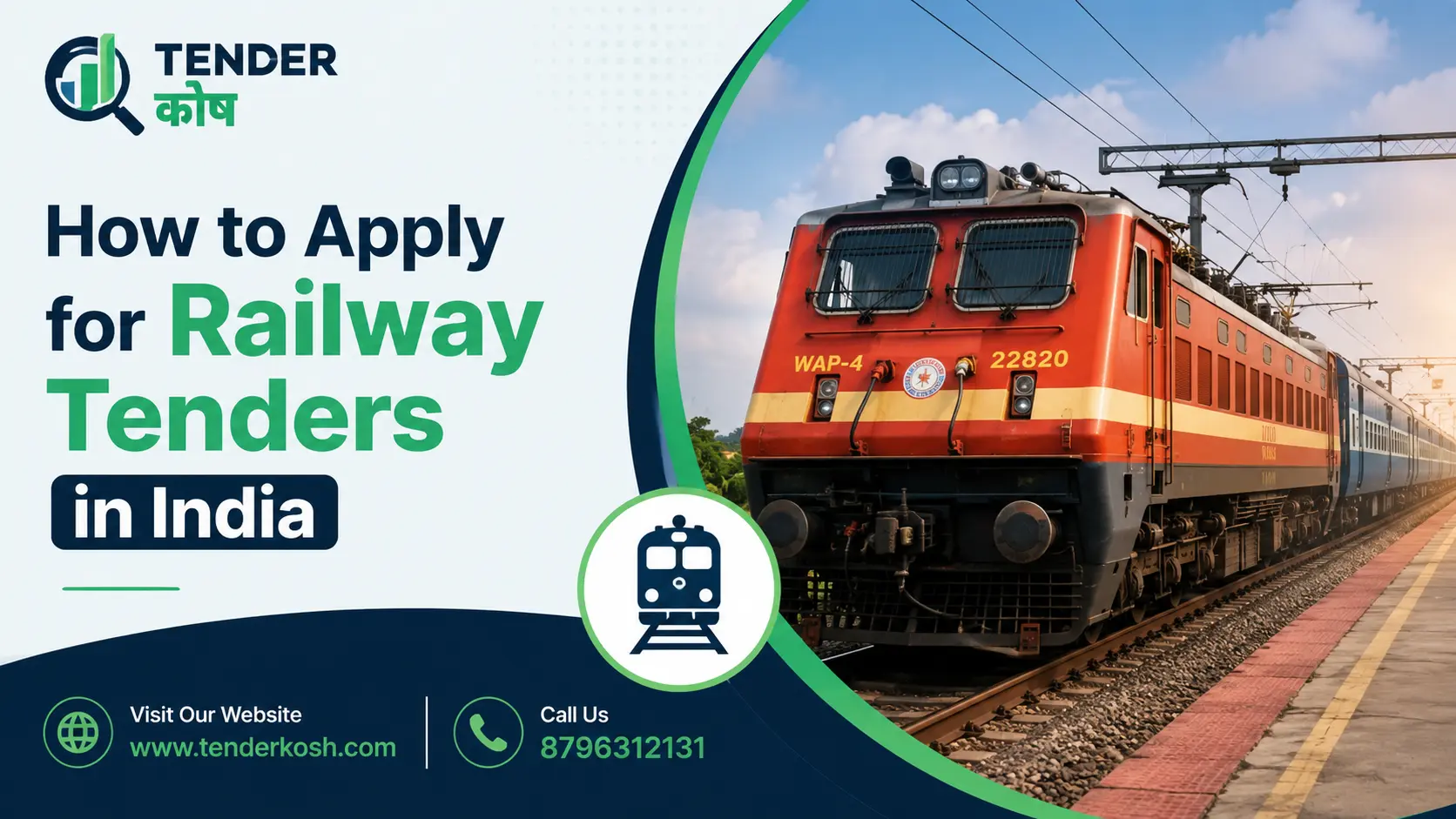
Railway tenders in India are floated primarily through IREPS (Indian Railways E-Procurement System) and cover everything from track works and rolling stock components to IT services, station development, and scrap auctions — making Indian Railways one of the largest single buyers in the country.
Indian Railways spends a significant share of its capital budget through competitive procurement every year. For a vendor, contractor, or manufacturer, this is one of the most reliable sources of recurring government business in India. But the railway tendering ecosystem is fragmented across multiple portals, dense with documentation requirements, and unforgiving of small procedural errors. This guide walks you through exactly where railway tenders are published, how to register on IREPS, what documents and certificates you need, and the complete step-by-step process of submitting a winning bid.
Key Takeaways
Railway tenders are formal invitations issued by Indian Railways and its associated entities to procure goods, execute works, or obtain services through competitive bidding. Because the railway network is administered through a structure of zonal railways, production units, and dedicated public sector undertakings, tenders originate from many different buyers — all of them governed by the same broad procurement framework.
The main categories of railway procurement are Goods and Services (supply of materials, components, consumables, IT and maintenance services), Works (construction and engineering contracts such as track laying, electrification, bridges, and station buildings), and Earning and Leasing (auction of scrap, advertising rights, parking, and commercial space).
Key buyers in the railway ecosystem include the 17 zonal railways, production units like ICF, RCF, and BLW, and railway PSUs such as RVNL (Rail Vikas Nigam Limited), IRCON, RITES, RailTel, IRFC, and CONCOR. Each may publish on IREPS, GeM, or its own portal — which is why systematic tracking matters.
Opportunity is large — but it favours the prepared. Indian Railways issues thousands of tenders across goods, works, and services every month. The vendors who win consistently are not necessarily the cheapest — they are the ones who register correctly, track the right portals, submit complete technically-compliant bids, and never miss a deadline or corrigendum.
Unlike a single centralised marketplace, railway tenders appear across several official platforms. Knowing which platform hosts which kind of tender saves you from missing opportunities.
| Platform | What It Hosts | Why It Matters to You |
|---|---|---|
| IREPS (ireps.gov.in) | The core Indian Railways e-procurement system for Goods & Services tenders, Works tenders, and e-auctions of scrap and assets across all zones and units. | This is the primary portal. If you intend to do business with railways regularly, IREPS registration with a DSC is essential. |
| GeM (Government e-Marketplace) | Catalogue-based and bid-based procurement of standardised goods and services. Many railway units route routine purchases through GeM. | Listing your products on GeM and watching railway bids there opens an additional, high-volume channel. |
| CPPP (eprocure.gov.in) | The Central Public Procurement Portal aggregates tender notices from across central government, including railway entities. | Useful as a cross-check and for PSUs that mirror their notices on CPPP. |
| Railway PSU portals | RVNL, IRCON, RITES, RailTel, and others run their own e-tendering portals for project-specific works and consultancy. | Large works and consultancy contracts are often found here before or instead of IREPS. |
The discovery problem: Because relevant tenders can appear on any of these platforms, manually checking each one daily is impractical for most businesses. This is the single most common reason vendors miss bids — not lack of capability, but lack of timely awareness. A tender aggregator that consolidates all railway sources into one searchable dashboard with category alerts solves this directly.
Railway tenders are open to a broad range of entities, but each tender specifies its own eligibility conditions. Before investing time in a bid, confirm you meet the criteria stated in that specific tender document.
For MSEs: Under the Public Procurement Policy for Micro and Small Enterprises, valid Udyam-registered MSEs can receive exemption from EMD and tender document cost, and relaxation in prior turnover and experience criteria. Keep your Udyam Registration certificate ready and submit it with every eligible bid to claim these benefits.
Assemble these documents before you start so you can upload them cleanly during bid submission. Incomplete or illegible documents are a leading cause of technical rejection.
| Document | Purpose | What to Check |
|---|---|---|
| Class 3 Digital Signature Certificate | Mandatory to register and digitally sign/encrypt bids | Issued in the name of an authorised signatory; valid (not expired); both signing and encryption components installed |
| Company Registration Proof | Establishes legal identity of the bidder | Incorporation certificate, partnership deed, or proprietorship proof as applicable |
| PAN & GST Registration | Tax compliance and identity verification | PAN and GSTIN must match the bidding entity’s name exactly |
| Experience / Completion Certificates | Proves you meet past-performance eligibility | Show value, scope, and client; signed/stamped by the issuing authority |
| Financial Documents | Demonstrates turnover and financial standing | Audited balance sheets, turnover certificates from a CA, solvency certificate if required |
| EMD Payment Proof | Security deposit confirming bid seriousness | Online payment reference; or MSE/NSIC exemption certificate where claiming exemption |
| Udyam Registration | To claim MSE exemptions and preferences | Valid 19-digit Udyam number matching the bidding entity |
| Technical Compliance Documents | Tender-specific specs, datasheets, RDSO approvals | Read the tender document — requirements vary; missing one item can disqualify the bid |
Before anything else, get a valid Class 3 Digital Signature Certificate from a licensed Certifying Authority, issued in the name of your authorised signatory. Install both the signing and encryption certificates on the machine you will use to bid. Without this, registration cannot be completed.
Visit ireps.gov.in and select Vendor/Contractor registration. Choose the relevant module — Goods & Services, Works, or Earning/Leasing. Enter company details, PAN, GST, and contact information, upload documents, and enrol your DSC. After verification, your login is activated.
Log in and search live tenders by zone, department, item category, or keyword. Read the full tender document, NIT, and any corrigenda. Confirm you meet eligibility, note the EMD, document checklist, and the bid submission and opening dates before committing.
Pay the EMD and tender document fee online through the integrated payment options (net banking, NEFT/RTGS, or gateway). If you are a valid MSE claiming exemption, upload your Udyam/NSIC certificate instead of paying — exactly as the tender permits.
Fill in the technical bid with eligibility and compliance documents, and the financial bid with your priced offer per the BOQ. Upload clear, legible files. Cross-check every mandatory field and document against the tender’s checklist before moving on.
Use your DSC to encrypt and digitally sign the bid, then submit before the deadline. Save the system-generated bid acknowledgement/submission ID. Submit early — last-minute uploads risk failure from connectivity or DSC issues.
Watch the clock, not just the calendar. Bid submission closes at an exact time on the closing date, and the portal will not accept a single second late. Treat the closing time as the real deadline, aim to submit at least a few hours in advance, and keep a screenshot or PDF of your submission confirmation.
Submitting your bid is the beginning of the evaluation cycle. Understanding the sequence helps you respond correctly at each stage.
At the scheduled date and time, the railway opens the technical bids. Each bidder’s eligibility documents, experience, and compliance with specifications are scrutinised. Bids that fail to meet a mandatory requirement — a missing certificate, inadequate turnover, non-compliant specification — are declared technically disqualified and do not proceed.
The tendering authority may seek clarifications or additional documents from bidders. Respond promptly and precisely within the time allowed. Silence or delay can cost you the bid even when your underlying offer is strong.
Only the financial bids of technically qualified bidders are opened. The system reveals the priced offers, and the comparative statement is prepared. In most cases the lowest evaluated responsive bidder (commonly called L1) is considered for award, subject to the tender’s evaluation criteria.
The successful bidder receives a Letter of Acceptance and is required to submit a Security Deposit / Performance Guarantee and sign the contract. EMD is then refunded. From here, performance is governed by the contract terms, delivery schedule, and quality requirements.
A rejected technical bid is almost always avoidable. The overwhelming majority of technical rejections come from preventable causes — a missing document, an expired certificate, an unsigned page, or a specification mismatch the bidder overlooked. Build a tender-specific checklist from the document itself and tick off every item before you submit.
Three money-related terms appear in almost every railway tender, and confusing them is a common beginner error.
| Term | What It Is | When It Is Returned |
|---|---|---|
| Tender Document Cost | A non-refundable fee for accessing/processing the tender (often waived for MSEs) | Not refunded — it is a processing charge |
| EMD (Earnest Money Deposit) | Refundable security showing your bid is serious | Refunded to unsuccessful bidders after award; to the winner after they furnish the Security Deposit |
| Security Deposit / Performance Guarantee | Furnished by the winning bidder to guarantee contract performance | Released after successful completion of contract obligations |
Valid MSEs with Udyam Registration are commonly exempt from both tender cost and EMD — but you must explicitly claim the exemption and attach the supporting certificate. Never assume the exemption is applied automatically; read what the specific tender requires.
Both platforms carry railway business, but they serve different needs. Serious vendors monitor both.
| Parameter | IREPS | GeM |
|---|---|---|
| Primary use | Works contracts, large supply tenders, scrap/asset auctions | Standardised goods and services, catalogue and bid-based purchases |
| Buyer scope | Railway-specific — all zones, units, and many PSUs | Pan-government, including railway units for routine procurement |
| Registration | Vendor/contractor registration on IREPS with DSC | Seller registration on GeM |
| Best suited for | Contractors, manufacturers of railway-specific items, works firms | Sellers of off-the-shelf products and standardised services |
| Recommended approach | Register on both. Watch IREPS for core railway works and supplies, and GeM for high-volume standardised procurement — to capture the full opportunity set. | |
Capability gets you into the race; discipline wins it. Here is what consistently successful railway vendors do differently.
Treating the closing date casually and attempting to upload minutes before the cutoff. The system locks at the exact time. Always submit hours early and keep your acknowledgement ID safe.
Bidding on the original document without checking for amendments. Corrigenda can change specifications, dates, or eligibility. Always confirm you are working from the latest version before submitting.
Uploading a bid with a missing certificate, unsigned page, or specification mismatch. These preventable gaps cause technical disqualification before price is even considered. Use a tender-specific checklist.
Discovering an expired or improperly installed Digital Signature Certificate at the last moment. Verify and renew your DSC well ahead of every bidding cycle.
Paying EMD and tender cost despite being a valid MSE, simply because the exemption was not claimed and the certificate not attached. Always submit your Udyam Registration to access entitled preferences.
Checking only one portal and missing tenders published elsewhere. Railway opportunities are scattered across IREPS, GeM, CPPP, and PSU sites. Centralised tracking prevents missed bids.
TenderKosh tracks live railway tenders from IREPS, GeM, CPPP, and PSU portals including RVNL, IRCON, RITES, and RailTel — all from a single dashboard. Get category-matched alerts so the right opportunities reach you the moment they are published. Track tenders from 1,000+ portals in one place.
Browse Railway Tenders View Plans Why TenderKoshIREPS (Indian Railways E-Procurement System) is the official online platform at ireps.gov.in through which Indian Railways floats and manages its tenders for goods, works, and services, as well as e-auctions of scrap and assets. Every zonal railway, production unit, and most railway PSUs publish tenders on IREPS. To participate, a bidder must register on the portal and hold a valid Class 3 Digital Signature Certificate.
Visit ireps.gov.in, click on Vendor/Contractor registration, and select the relevant module (Goods & Services, Works, or Earning/Leasing). Fill in your company details, PAN, GST, and contact information, then upload supporting documents and enrol a valid Class 3 Digital Signature Certificate issued in the name of an authorised signatory. After verification, your login is activated and you can participate in e-tenders and e-auctions.
IREPS is Indian Railways’ dedicated e-procurement portal, used for works contracts, large supply tenders, and asset auctions. GeM (Government e-Marketplace) is a pan-government marketplace used by railways mainly for standardised goods and services through catalogue-based and bid-based procurement. Many railway units now route certain purchases through GeM, so serious bidders should register on and monitor both platforms.
Yes. A valid Class 3 Digital Signature Certificate (DSC) is mandatory to register and submit bids on IREPS and most railway e-procurement platforms. It must be issued in the name of an authorised signatory of the bidding entity and is used to digitally sign and encrypt your bid documents. Bids submitted without a valid DSC cannot be accepted by the system.
EMD (Earnest Money Deposit) is a refundable security amount submitted with a bid to demonstrate seriousness. In railway tenders it is usually paid online via net banking, NEFT/RTGS, or an integrated payment gateway. EMD is refunded to unsuccessful bidders after the tender is decided, and to the successful bidder after they furnish the required Security Deposit or Performance Guarantee. Valid MSEs with Udyam Registration are often exempt from EMD.
Yes. Under the Public Procurement Policy for Micro and Small Enterprises, MSEs with valid Udyam Registration are generally exempt from EMD and tender document cost, and may receive relaxation in prior turnover and experience criteria. Railways also reserve a portion of procurement for MSEs. To claim these benefits, hold a valid Udyam Registration and submit the certificate with your bid.
Railway tenders typically follow a two-packet system. The technical bid contains eligibility documents, experience certificates, registration proofs, and compliance with specifications. The financial bid contains your priced offer. The financial bid is opened only for bidders who qualify technically, ensuring price is compared only among bidders who meet the technical and eligibility requirements.
Live railway tenders are published on IREPS (ireps.gov.in), CPPP, GeM, and the individual websites of zonal railways and PSUs such as RVNL, IRCON, RITES, and RailTel. Because tenders are scattered across many portals, vendors often use an aggregator like TenderKosh to track all railway tenders from a single dashboard and receive alerts matching their product or service categories.
You typically need company registration proof, PAN, GST registration, a valid Class 3 Digital Signature Certificate, past experience or completion certificates, financial documents such as audited balance sheets and turnover certificates, EMD payment proof, Udyam Registration (for MSE benefits), and tender-specific technical compliance documents. Always read the tender document carefully, as requirements vary by tender.
Discover relevant tenders, monitor corrigenda, compare opportunities, and move from document reading to structured action.