TenderKosh for EPC teams
Turn tender reading into faster bidding decisions.
Discover relevant tenders, monitor corrigenda, compare opportunities, and move from document reading to structured action.
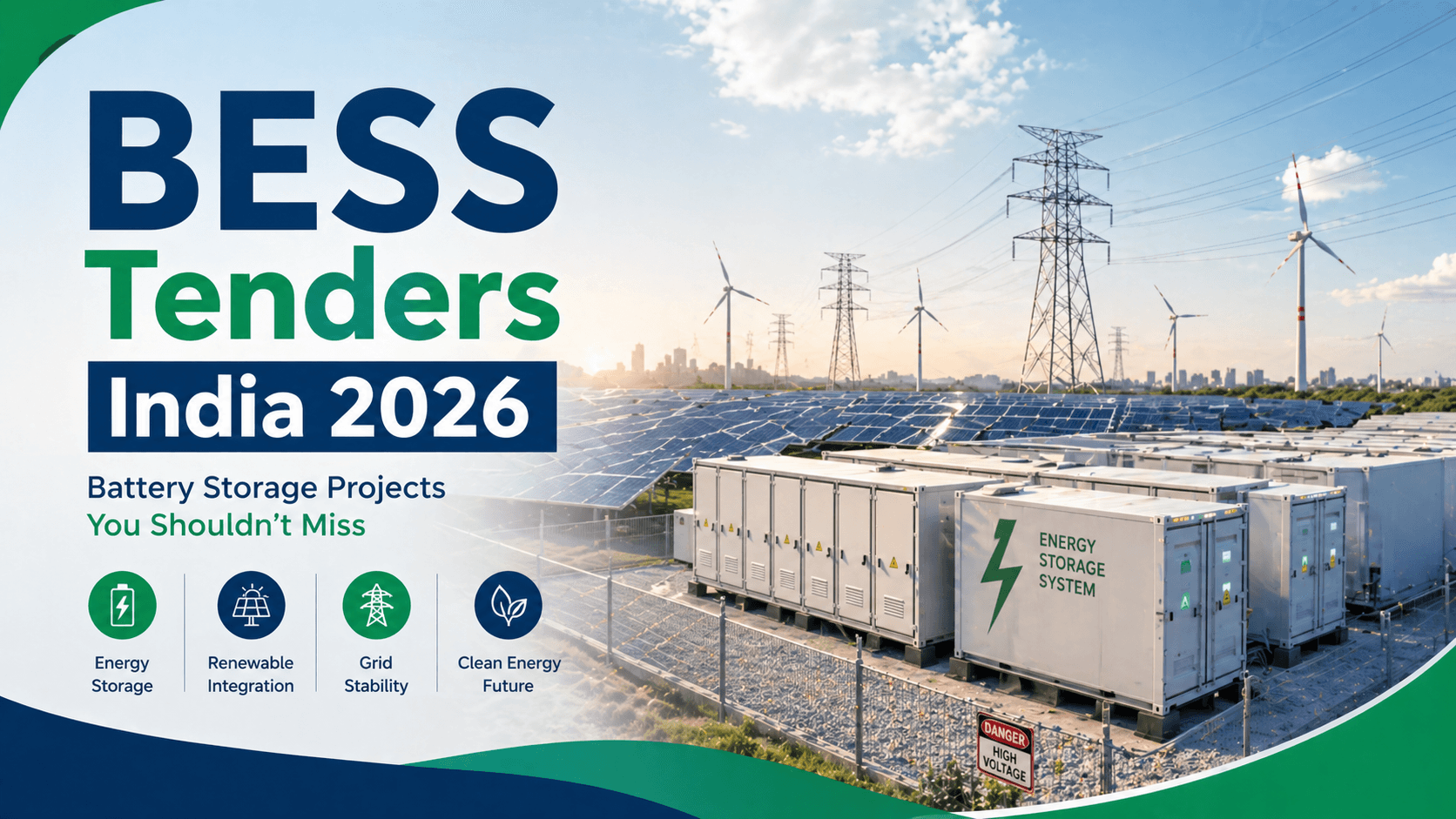
Battery Energy Storage Systems (BESS) have become one of the fastest-growing segments of Indian infrastructure — and for EPC contractors, the pipeline of BESS tenders in India represents a genuinely landmark opportunity. After more than 130 GWh of storage tenders were floated in 2025 alone, and with the government approving a fresh multi-thousand-crore push in 2026, the addressable market for battery storage equipment and construction runs into lakhs of crores over the coming years.
This complete guide is built specifically for EPC contractors, developers, and suppliers who want to understand and win BESS tenders in India. It covers why the market is booming, who floats the tenders, the funding schemes that make projects bankable, the different bid models, eligibility and technical standards, and a practical bidding strategy. Whether you build turnkey systems or supply into them, here is how to navigate BESS tenders in India.
A note on figures: The scheme values, VGF caps, tariffs, and market figures below are drawn from public reporting and policy announcements current as of mid-2026 (IESA, Mercom, SECI/MNRE notifications, and sector publications). Storage policy is moving fast and specifics change through new tranches and corrigenda. Always verify current scheme terms and any individual tender’s conditions against the official SECI, NTPC, or MNRE documents before bidding.
Key Takeaways
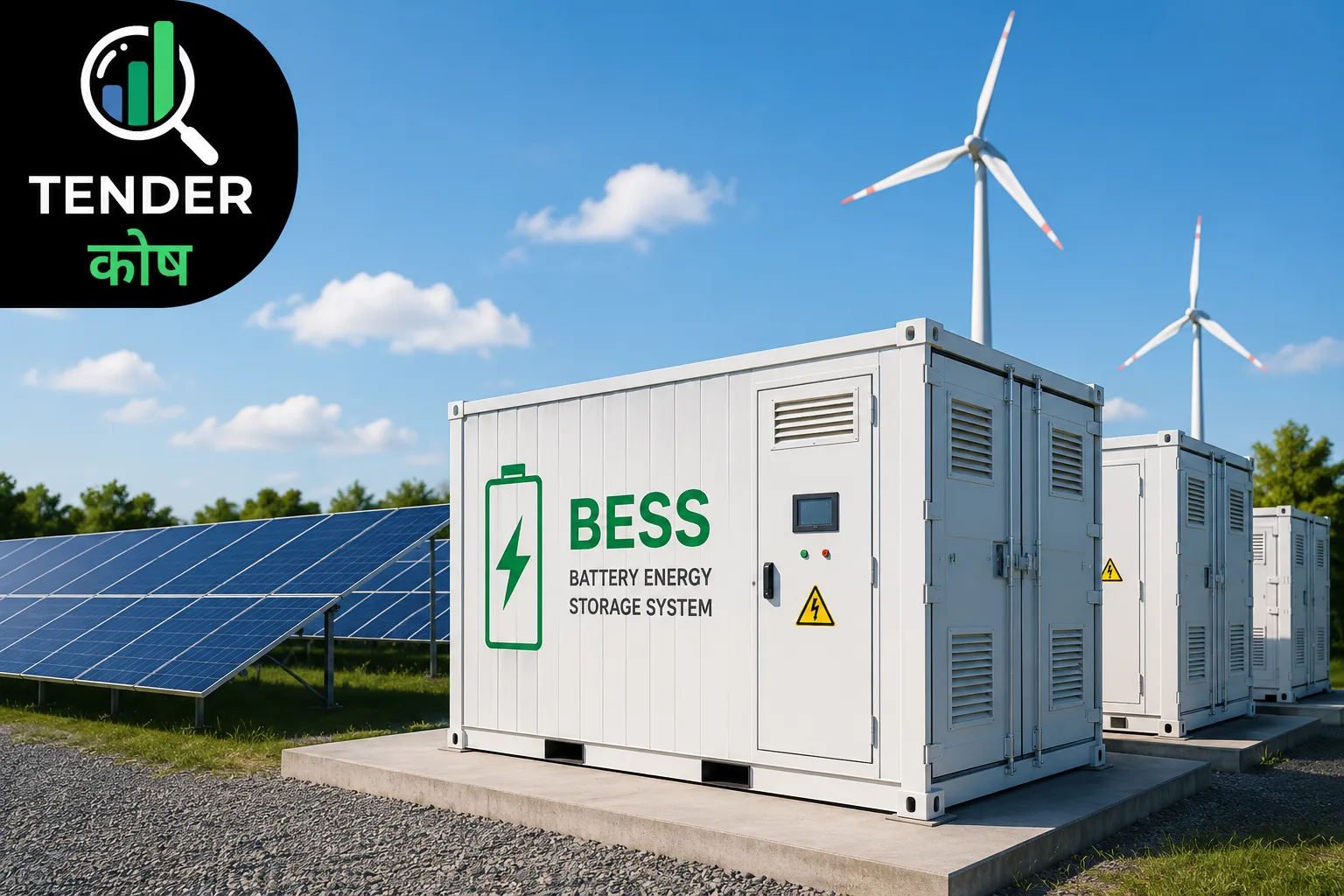
The driver is a problem called the “duck curve.” India has crossed 250 GW of renewable capacity, but solar generates in the middle of the day while demand peaks in the evening — exactly when solar output collapses. Without storage, that surplus daytime solar is either curtailed or backed up by expensive thermal ramping. Battery storage solves this by soaking up cheap daytime power and releasing it during the evening peak.
This is not a speculative bubble — it is a procurement mandate. The scale of demand, backed by firm government policy and funding, means BESS tenders will keep flowing quarter after quarter for years, making it a strategic segment for any EPC firm in the power and renewables space.
Understanding the buyers is the first step to tracking the right opportunities. BESS tenders come from both central agencies and states.
| Procuring Body | Role in BESS Procurement |
|---|---|
| SECI Largest | Solar Energy Corporation of India — the biggest BESS auctioneer; also acts as bid-process coordinator for state schemes |
| NTPC / NTPC Green | Standalone and thermal-plus-BESS EPC tenders at its power stations |
| NLC India & PGCIL | Additional central-sector standalone BESS and grid-support procurement |
| State DISCOMs / Utilities | GUVNL (Gujarat), RVUNL (Rajasthan), and utilities in Andhra Pradesh, Maharashtra, Tamil Nadu, and more — additive to the central pipeline |
The single most important policy lever behind BESS tenders in India is Viability Gap Funding (VGF) — a capital subsidy that bridges the gap between a project’s cost and the tariff DISCOMs are willing to pay. Without it, many storage projects would not be bankable. Understanding VGF is essential to reading any BESS tender.
| VGF Element | Detail |
|---|---|
| VGF Tranche I (to mid-2025) | Up to ~₹27 lakh/MWh, or around 30% of capital cost |
| VGF Tranche II (from July 2025) | Revised to ~₹18 lakh/MWh, reflecting falling system costs |
| May 2026 Cabinet Approval | ~₹5,400 crore outlay to support ~30 GWh of new storage capacity |
| Disbursement | Paid in installments tied to commissioning, dispatch availability, and storage-cycle benchmarks |
| Security | Developers furnish a bank guarantee / surety bond against VGF disbursed |
Why this matters to EPC contractors: Even if you bid as an EPC contractor rather than a developer, VGF shapes the whole project economics — it determines how aggressively developers price, how much capex they can absorb, and how tightly they’ll squeeze the build cost. Understanding the VGF level on a given tender helps you price your EPC scope realistically and anticipate the developer’s cost pressures.
Not all BESS tenders are the same. They differ in structure and in what the winning party actually does — a crucial distinction for deciding where your firm fits.
A pure battery project providing peak shaving and grid services. Often 2-hour (2 cycles/day) or 4-hour (1 cycle/day) systems, awarded on a capacity charge (₹/MW/month).
Battery storage co-located with a solar plant, storing daytime generation for later dispatch — common in high-solar states.
Firm and Dispatchable Renewable Energy — renewables plus storage engineered to guarantee assured power during defined peak windows.
| Model | What the Winner Does | Best For |
|---|---|---|
| BOO (Build-Own-Operate) | Builds, owns & operates the asset under a 12–15 year PPA, earning a capacity charge | Developers with long-term capital and appetite for ownership |
| EPC (Turnkey) | Designs, procures, builds & commissions the system for the owner; paid for the build, not ownership | EPC contractors focused on engineering and construction |
The EPC opening. While much of the market is BOO (developer-owned), a growing EPC segment is emerging — most notably NTPC, which has issued EPC BESS tenders (including thermal-plus-BESS at its power stations). For pure EPC firms that would rather build than own an asset for 15 years, these turnkey packages are the natural entry point. Expect this thermal-plus-BESS and PSU-EPC segment to grow.
BESS tenders carry stringent financial and technical bars — and for EPC contractors, the technical compliance of your equipment supplier is as important as your own qualifications.
Net-worth and turnover thresholds that scale with project size — large FDRE tenders can require net worth of several lakh rupees per MW/MWh of capacity.
Battery systems typically need IEC 62619; power conversion IEC 62477 or equivalent; with UL 9540A and IS standards increasingly referenced.
Projects must meet the CERC grid standards for BESS — covering grid integration, protection, and ancillary services like frequency regulation.
The supplier-qualification trap: In most BESS tenders the developer sits between the battery supplier and the offtaker, but the technical specification flows down to the supplier. EPC contractors often lose time because supplier due diligence cannot be done inside the tight 60–90 day RFQ-to-bid window. The winning move is to identify and technically qualify your BESS suppliers — with valid IEC 62619 and other certification — before a tender drops, not after.
Line up and technically vet battery and PCS suppliers in advance, with certification ready, so you can move fast when a tender is floated.
Register on SECI’s e-procurement portal, the ISN/ETS platform, and CPPP, and keep your financial qualification documents current.
Model the Levelised Cost of Storage for your target tender to price your EPC scope competitively and understand the developer’s economics.
Lock firm equipment pricing and delivery early — cell and system supply chains are tight and volatile, and this protects your bid margin.
Match every eligibility, EMD, and documentation requirement precisely. See our tender compliance checklist.
With a 60–90 day window, early awareness is everything. Monitor tenders and amendments — see our guide to finding corrigenda.
The margin advantage of preparation. BESS tenders move from RFQ to submission in roughly 60–90 days — too short to qualify suppliers, model costs, and structure partnerships from scratch. EPC firms that do this groundwork before a tender drops consistently submit sharper, more compliant bids than those scrambling inside the window. In a fast-moving market, readiness is the edge.
With 130+ GWh of storage tendered in a single year and short bidding windows, missing a BESS tender means missing the opportunity entirely. TenderKosh tracks BESS, solar, and infrastructure tenders — plus corrigenda — across 1,000+ government procurement portals including SECI, NTPC, and state utilities, so you catch the right BESS tenders in India early and bid fully prepared.
Browse Live Tenders View Plans Why TenderKoshBESS tenders in India have moved from a niche experiment to one of the country’s biggest infrastructure opportunities, driven by the hard grid-balancing need created by India’s renewable boom and backed by firm policy and funding. For those chasing BESS tenders in India, the pipeline — from SECI and NTPC to state DISCOMs, across standalone, solar-plus-BESS, and FDRE structures — offers years of high-value work in a strategically vital segment.
The firms that win will be those that understand the VGF-driven economics, know where they fit (EPC build versus developer ownership), pre-qualify their equipment suppliers against the required standards, and track the fast-moving tender pipeline closely. Do that groundwork, and India’s battery storage build-out becomes not just a market to watch, but a durable engine of growth for your business.
BESS tenders in India are procurement processes for setting up Battery Energy Storage Systems — large batteries that store electricity (usually from solar or the grid) and release it when demand peaks. They are floated by central agencies such as SECI, NTPC, NLC India, and PGCIL, and by state utilities and DISCOMs like GUVNL and RVUNL. Tenders cover standalone BESS, solar-plus-BESS, and firm and dispatchable renewable energy (FDRE) projects, and are typically awarded on a Build-Own-Operate model, often supported by Viability Gap Funding to make projects bankable.
VGF stands for Viability Gap Funding — a government capital subsidy that bridges the gap between a project’s cost and the tariff distribution companies are willing to pay, making battery storage projects bankable. In India’s BESS programme, VGF Tranche I offered up to about ₹27 lakh per MWh (or around 30% of capital cost), and Tranche II from July 2025 revised this to about ₹18 lakh per MWh as system costs fell. In May 2026, the Union Cabinet approved a further outlay of around ₹5,400 crore to support roughly 30 GWh of new storage capacity. VGF is disbursed in installments linked to commissioning and performance benchmarks.
BESS tenders in India are floated primarily by central agencies including the Solar Energy Corporation of India (SECI), NTPC and NTPC Green Energy, NLC India, and Power Grid Corporation (PGCIL), often acting as bid-process coordinators for schemes backed by the Ministry of Power and MNRE. In addition, many state utilities and DISCOMs — such as GUVNL in Gujarat, RVUNL in Rajasthan, and others in Andhra Pradesh, Maharashtra, and Tamil Nadu — issue their own BESS tenders, which are additive to the central pipeline.
In a developer (BOO) BESS tender, the bidder builds, owns, and operates the storage asset under a long-term power purchase agreement and earns a capacity charge over 12 to 15 years. In an EPC BESS tender, the contractor is engaged only to design, engineer, procure, construct, and commission the storage system on a turnkey basis for the project owner — for example, NTPC issuing EPC BESS tenders at its thermal stations — and is paid for the build rather than owning the asset. EPC contracts suit firms focused on engineering and construction rather than long-term asset ownership.
BESS tenders in India typically require the battery system to meet IEC 62619 certification, with power conversion systems meeting IEC 62477 or equivalent, and safety standards such as UL 9540A increasingly referenced. Projects must also comply with the Central Electricity Regulatory Commission’s updated grid standards for battery storage, which set requirements for grid integration, protection, and ancillary services such as frequency regulation and reactive-power support. EPC contractors must ensure their equipment suppliers can furnish valid certification, as these requirements flow down from the tender through the developer to the supplier.
Discover relevant tenders, monitor corrigenda, compare opportunities, and move from document reading to structured action.